
Table of Contents
ToggleCMS Prior Authorization Final Rule: What Providers Must Prepare for Before 2027
The CMS prior authorization final rule is changing how many health plans receive requests, share decisions, and exchange patient data. Providers do not carry every legal duty in the rule, but their daily work will change as payer systems become more connected.
The first process changes started in 2026. Major technology requirements generally arrive in 2027. A practice that improves its workflow now can spend less time chasing status updates, fixing missing records, and learning new payer tools under pressure.
This guide explains the rule in plain language and shows what medical groups, hospitals, billing teams, and revenue cycle leaders can prepare. It focuses on people, documentation, technology, and clear ownership so your organization can move with confidence.
Prepare the workflow now. Connect faster when payer systems arrive.
What Is the CMS Prior Authorization Final Rule?
CMS published the rule to reduce delays and make health information easier to share. Its formal name is CMS 0057 F. It covers prior authorization processes and several application programming interfaces used by impacted health plans.
An application programming interface lets two approved systems exchange information in a set format. In this case, it can let a provider system ask about coverage rules, send a request, and receive a status or decision with less manual work.
The rule builds on earlier federal data sharing work. It aims to give patients, providers, and health plans better access to useful health information. It also asks covered payers to make prior authorization decisions faster and explain denials clearly.
Why 2027 Matters for Provider Teams
Most of the new application programming interface duties generally start on January 1, 2027. Some payer types may follow a different plan year date, so every organization should confirm timing with each plan it works with.
That date matters because technical access alone will not fix a weak process. If staff still search for records, copy data by hand, or send requests without clear support, a new connection may only move incomplete information faster.
Providers should use the time before 2027 to review high volume services, common denial reasons, payer portals, EHR fields, and staff handoffs. The goal is a clean process that can use new payer connections as they become available.
Which Health Plans Must Follow the Rule?
The rule applies to Medicare Advantage organizations, state Medicaid and the Children Health Insurance Program fee for service programs, Medicaid managed care plans, related managed care entities, and certain marketplace health plan issuers.
It does not place the same duties on every health plan. Traditional Medicare already follows separate prior authorization programs. Commercial plans outside the listed groups may choose similar tools, but this rule does not automatically cover all of them.
A provider may work with both impacted and nonimpacted plans. That means the office may need more than one process for some time. A payer list with products, contacts, portals, and connection status can prevent staff confusion.
What Changed in 2026?
Several operating requirements took effect in 2026. Impacted payers must send a specific reason when they deny a prior authorization request. They must also meet decision timeframes and publish selected prior authorization numbers on a public website.
These changes give providers a stronger base for follow up. A clear denial reason helps the team decide whether it should add records, correct an error, appeal the result, or speak with the payer about a coverage rule.
Provider leaders should not wait for an application connection before using these improvements. They can track decision dates, compare stated denial reasons, and use public payer data to guide contract talks and workflow changes today.
Faster Prior Authorization Decisions
For standard requests, impacted payers generally must send a decision within seven calendar days. For urgent requests, they generally must act within seventy two hours. Some program rules can require a faster answer or allow an exception.
The clock only helps when the request reaches the right payer with the information it needs. Staff should record the submission time, confirmation number, service date, urgency level, and payer response in one place.
A missed deadline should trigger a defined action. The team may check the portal, call the plan, document the contact, and escalate the case. Clear steps protect patient access and keep a delayed request from disappearing in a queue.
Clear Reasons When a Request Is Denied
A short message such as not medically necessary often leaves the provider guessing. The rule requires impacted payers to give a specific reason for a denial, which can make the next action easier to understand.
The reason may point to missing clinical notes, a coverage rule, an incorrect setting, or a different required service. Billing and clinical staff should sort denial reasons into simple groups and assign an owner to each group.
This work also supports cleaner appeals. When the team knows exactly why the payer denied a request, it can answer that point with the right note, test result, treatment history, or correction instead of sending a large record without direction.
Public Data Creates More Transparency
Impacted payers must publish yearly information such as approval rates, denial rates, appeal results, and average decision times. The first public report covered 2025 data and was due by March 31, 2026.
A provider can use these numbers to compare payer behavior with its own experience. A large gap may show a local documentation problem, a submission issue, a service mix difference, or a pattern that deserves a closer payer review.
Public numbers do not replace case level tracking. Providers still need their own data on request volume, time to decision, denied services, appeal success, staff effort, delayed care, and lost or delayed revenue.
What Changes With Payer APIs in 2027?
In 2027, impacted payers generally must offer stronger data connections. The prior authorization API will let approved provider systems check whether prior approval is needed, find documentation needs, send information, and receive a payer response.
The payer response can show an approval, a denial with a specific reason, or a request for more information. This can reduce portal switching and phone calls when the provider system and payer connection work well together.
The rule also includes patient access, provider access, and payer to payer data exchange. Together, these changes can bring more useful history into care and reduce the need for patients to repeat information when they change plans.
How the Prior Authorization Process Will Work
A connected process should begin before the order becomes a claim problem. The system can check requirements near the time of scheduling, guide the user to needed documents, and keep the status visible to clinical and billing teams.
The provider still needs to send accurate information. Automation cannot prove medical need when the note does not explain symptoms, prior care, test findings, or the reason for the requested service.
Teams should design an exception path for requests that cannot move through the normal electronic flow. A payer outage, unusual service, missing patient match, or urgent change in condition may still require a portal, phone call, or secure message.
How Better Data Sharing Can Help Patient Care
Provider access can give an approved clinician better access to patient data held by an impacted payer. Useful information may include claims, encounter data, selected clinical data, and prior authorization details.
Better access can support treatment decisions and reduce repeated work. It can also help a care team understand services received outside its network, although staff must still review the source, date, and clinical meaning of the information.
Payer to payer exchange can help move records when a patient changes coverage. Providers may benefit from a fuller history, while patients may face fewer gaps. Strong patient matching and privacy controls remain important throughout the exchange.
What the Rule Does Not Require Providers to Do
The rule does not say that every provider must buy a new platform by January 1, 2027. Most direct technical duties sit with impacted payers. Provider readiness still matters because payer tools only create value when practices can use them.
A small office can start with process work before making a large technology purchase. It can name owners, clean up templates, study payer requirements, and ask its EHR vendor what connections it plans to support.
Providers should also avoid assuming that every request will become fully automatic on day one. Payers, vendors, and provider systems may reach readiness at different times, so a safe manual backup will remain necessary.
Prepare Your EHR and Connections
Ask your EHR, practice management, and clearinghouse vendors how they plan to support payer connections. Request a timeline, testing plan, supported data standard, cost details, user training, and a clear process for failed transactions.
Review where authorization data lives today. The order, diagnosis, service code, place of service, clinical note, payer response, approval number, dates, and status should move through the workflow without repeated entry.
Security teams should review access, user roles, patient consent where required, logging, and vendor agreements. A fast connection must still protect patient information and show who viewed, changed, or sent each record.
Improve Clinical Documentation Before Submission
Good documentation answers the payer question before the reviewer asks it. The note should explain the patient problem, relevant findings, prior treatment, response to care, and why the requested service fits the current need.
Standard templates can help, but they should not create copied notes that hide the patient story. Give clinicians short prompts for the facts payers often require, then let them record the details that apply to the patient.
Xoodoc AI medical coding support can help teams connect clear clinical facts with accurate codes. The provider remains responsible for the diagnosis and the record must support every code sent.
Map Services, Codes, and Payer Rules
Start with services that create the most delays or denials. Map the order, code, payer rule, needed record, submission path, decision, and appeal. This view shows where staff repeat work or discover missing information too late.
Use automated insurance eligibility verification early in the patient journey. Correct plan details help the team find the right payer rules and avoid sending a request to the wrong product.
Give Every Team Member a Clear Role
Keep payer rules in a controlled source and assign someone to review changes. Staff should know when a service needs approval, which documents support it, and where to confirm an answer when the rule is unclear.
How Xoodoc Can Support Readiness
Give the ordering clinician, authorization specialist, scheduler, billing team, and manager a clear part in the process. Each request should have one current owner, one visible status, and one next action with a due date.
A Practical 90 Day Preparation Plan
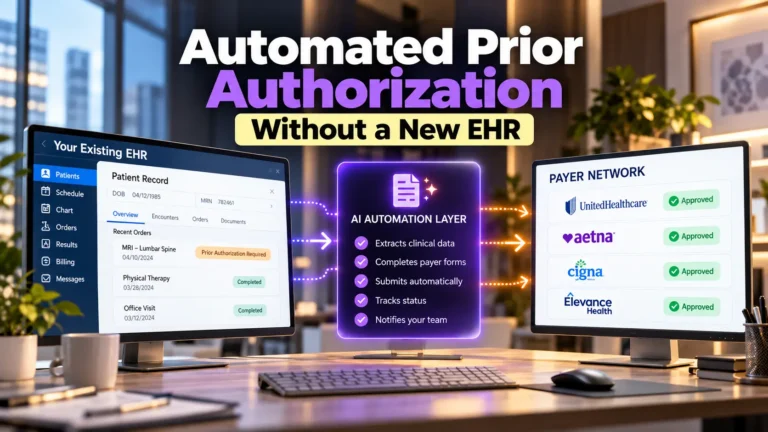
Xoodoc can support readiness through automated prior authorization and connected revenue cycle tools. The aim is to reduce manual checks, guide complete submissions, and keep teams informed while people retain control of important choices.
During the first thirty days, record the current process and measure request volume, turnaround time, common denial reasons, appeal results, and staff effort. Choose several high impact services and plans for closer review.
During the next thirty days, fix basic gaps. Update documentation prompts, define ownership, clean payer records, and confirm escalation steps. Ask vendors for written readiness details and select a small test group.
Key Takeaway for Healthcare Providers
During the final thirty days, test the new process, review errors, and train affected staff. Connect the work with healthcare revenue cycle automation so approvals, claims, denials, and payment work share useful status information.
The CMS prior authorization final rule creates a real chance to reduce waiting and manual follow up, but technology is only one part of the change. Providers need clean information, clear roles, and reliable backup steps.
The 2027 prior authorization requirements should become part of a wider access and revenue plan. When clinical, scheduling, authorization, billing, and technology teams share one process, patients can receive clearer answers and staff can spend less time searching.
Official CMS Reference
Read the official CMS fact sheet for the rule summary, covered payer groups, dates, and policy details. Confirm payer specific instructions before changing a live workflow.
Frequently Asked Questions
What is the CMS prior authorization final rule?
It is a federal rule that requires certain health plans to improve prior authorization decisions, explain denials, report public data, and support new health data connections.
Do all providers have to install a new system by January 1, 2027?
No. The main technical duties apply to impacted payers. Providers should still prepare their workflow, records, staff, and vendor connections so they can use the new payer tools.
Which payers are impacted by the rule?
The rule covers Medicare Advantage organizations, state Medicaid, the Children Health Insurance Program, related managed care plans, and certain health plans sold through federally supported marketplaces.
How fast must a payer answer a prior authorization request?
Impacted payers generally have seven calendar days for a standard request and seventy two hours for an urgent request. Other program rules may require a faster response or allow an exception.
Does this final rule cover prescription drug approvals?
No. The prior authorization requirements in this final rule apply to covered medical items and services, not prescription drugs. Separate rules may apply to drug requests.
How should a provider prepare before 2027?
Map the current process, improve clinical records, assign clear owners, track payer results, ask vendors about connections, train staff, test high volume services, and keep a safe manual backup.