Allergic reactions are common in clinics, urgent care centers, emergency rooms, and hospitals. A patient may come in with a rash, itching, swelling, hives, breathing trouble, stomach upset, or a severe reaction after food, medicine, insect stings, latex, or another trigger. When a provider treats this patient, the medical record must show the right diagnosis. That is where ICD 10 codes for allergic reaction help.
ICD 10 codes turn the diagnosis into a standard code. Doctors, medical coders, billers, and insurance teams use these codes to understand what happened during the visit. A correct code can support clean claims, better records, and proper follow up care. A wrong or vague code can lead to confusion, delays, or claim problems.
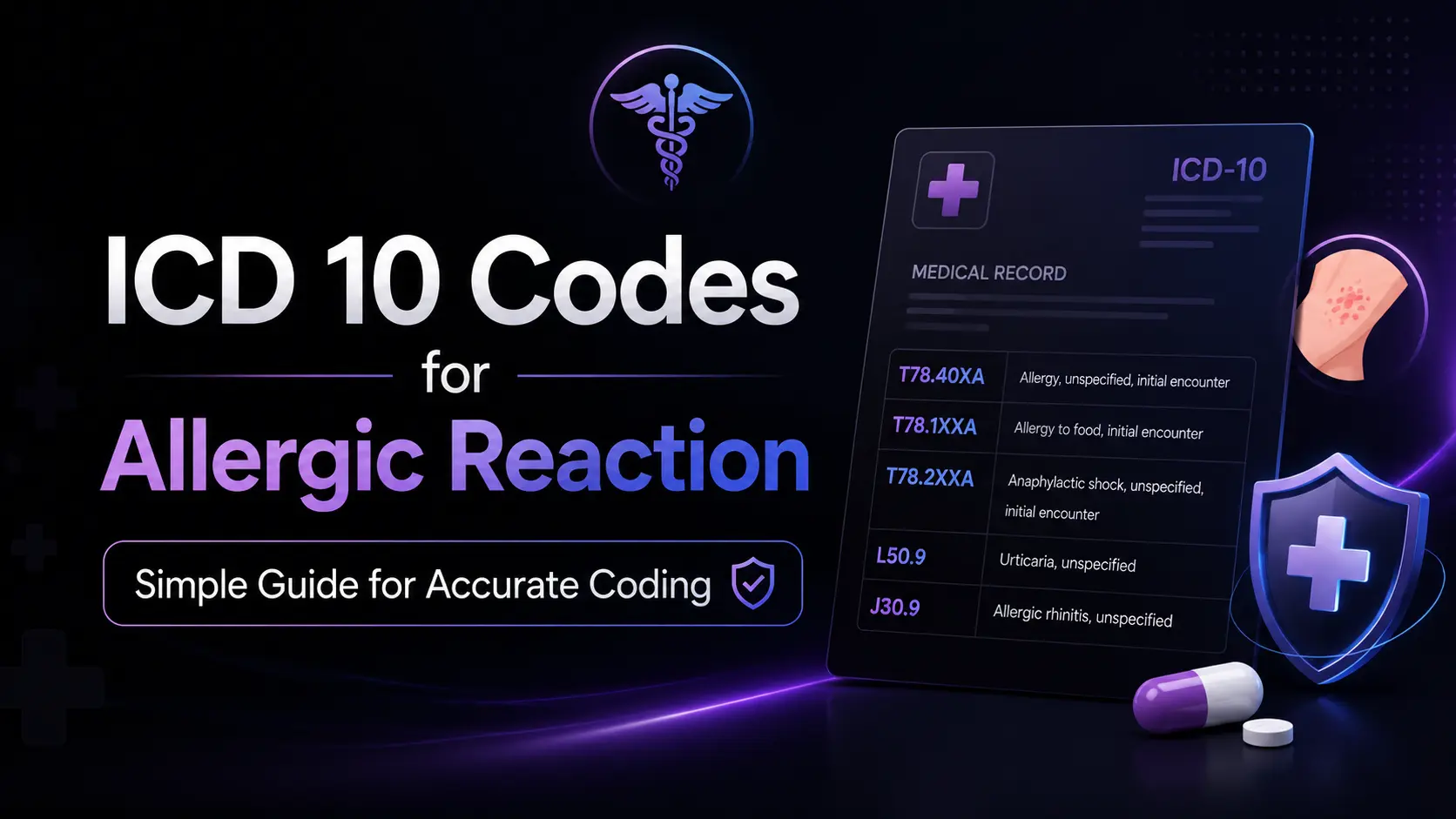
The most common code people search for is T78.40XA. This code means allergy, unspecified, initial encounter. It is often used when the provider documents an allergic reaction but does not name the exact cause. Still, this code does not fit every allergy case. Some reactions need a more specific code, such as anaphylaxis, food reaction, drug reaction, vaccine reaction, or allergy history status. CMS lists many allergy related codes in its allergy testing billing article, including T78.40XA, T78.2XXA, T78.3XXA, T88.6XXA, and several Z88 status codes.
Table of Contents
ToggleWhat Are ICD 10 Codes for Allergic Reaction
ICD 10 codes for allergic reaction are diagnosis codes that describe an allergy event, allergy history, or severe allergy response. They help explain why the patient needed care. They also help separate a mild rash from a life threatening reaction.
For example, a patient may get hives after eating a food. Another patient may have swelling of the lips after taking medicine. Another patient may have trouble breathing after a bee sting. These cases may all involve allergy, but they do not always use the same code.
The right code depends on the provider note. The note should show the type of reaction, the cause when known, the severity, the body system involved, and whether the visit is active treatment, follow up, or care for a later effect.
Most Common ICD 10 Code for Allergic Reaction
The common Allergy ICD 10 code for an unspecified allergic reaction is T78.40XA. This code means allergy, unspecified, initial encounter.
Use T78.40XA when the record says the patient has an allergic reaction, but the provider does not document the exact allergen or a more specific condition. This code can fit a first active visit for a general allergic reaction when the cause remains unclear.
The last character matters. The letter A means initial encounter. It does not always mean the first time the patient ever had the allergy. In ICD 10 coding, initial encounter means the patient receives active treatment for the condition. The letter D means subsequent encounter. This often applies to follow up care after active treatment. The letter S means sequela. This applies to a later effect caused by the allergy event.
So, T78.40XA means allergy, unspecified, initial encounter. T78.40XD means allergy, unspecified, subsequent encounter. T78.40XS means allergy, unspecified, sequela.
ICD 10 Code for Allergic Reaction Unspecified
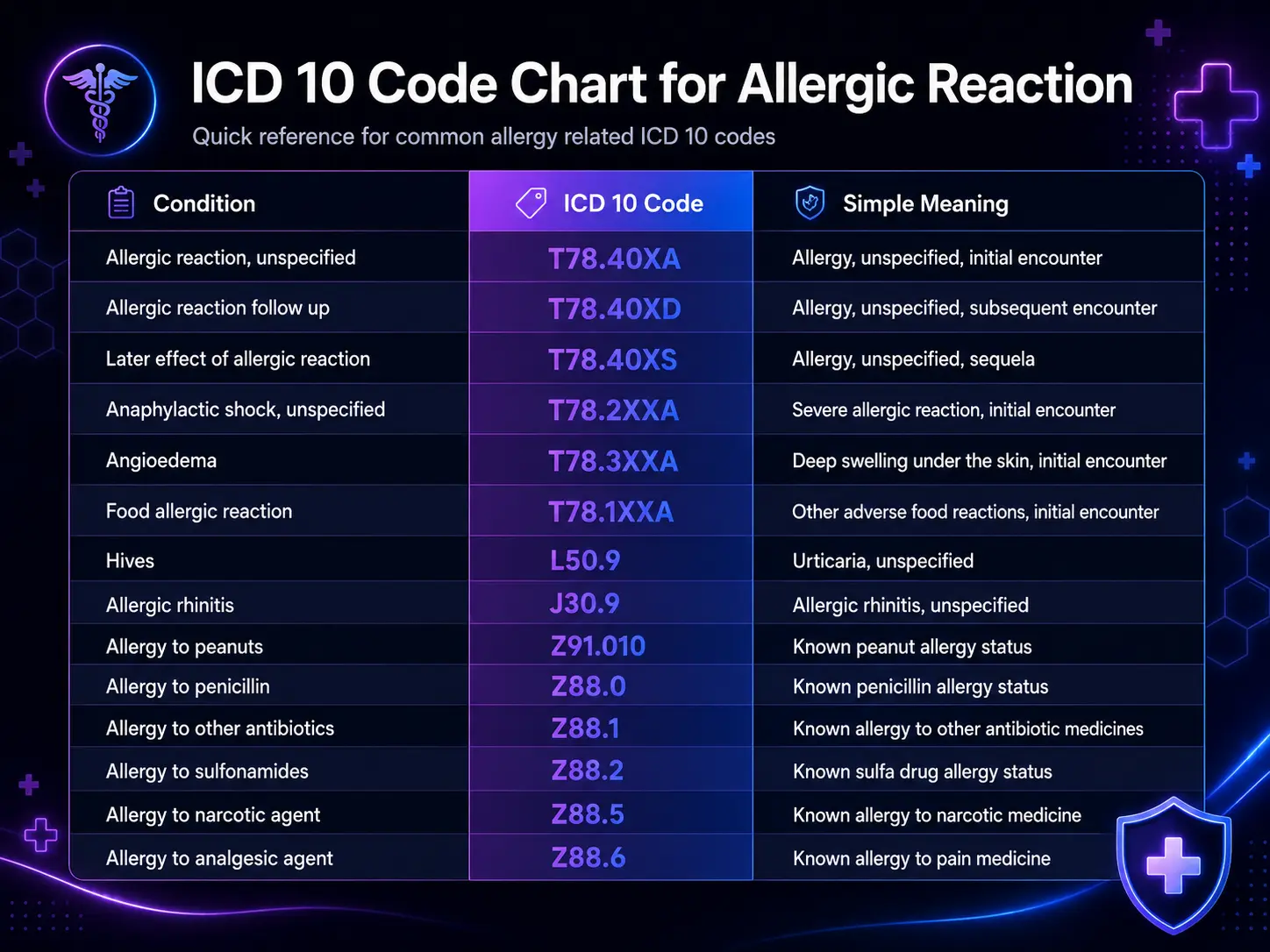
The ICD 10 code for allergic reaction unspecified is T78.40XA when the patient receives active treatment. Coders often use this code when the note does not name the cause of the reaction.
A simple example can make this clear. A patient comes to urgent care with itching and hives. The patient does not know what caused it. The provider treats the symptoms and writes allergic reaction, cause unknown. In that case, T78.40XA may fit.
But coders should avoid using unspecified codes when the record gives better detail. If the provider documents anaphylaxis, angioedema, food reaction, drug reaction, or a known allergy status, a more exact code may apply.
Also read:
ICD 10 Codes for Anaphylaxis
Anaphylaxis is a severe allergic reaction. It can affect breathing, blood pressure, skin, stomach, and the heart. It can become life threatening. Because it is more serious than a mild allergy, it needs a different code.
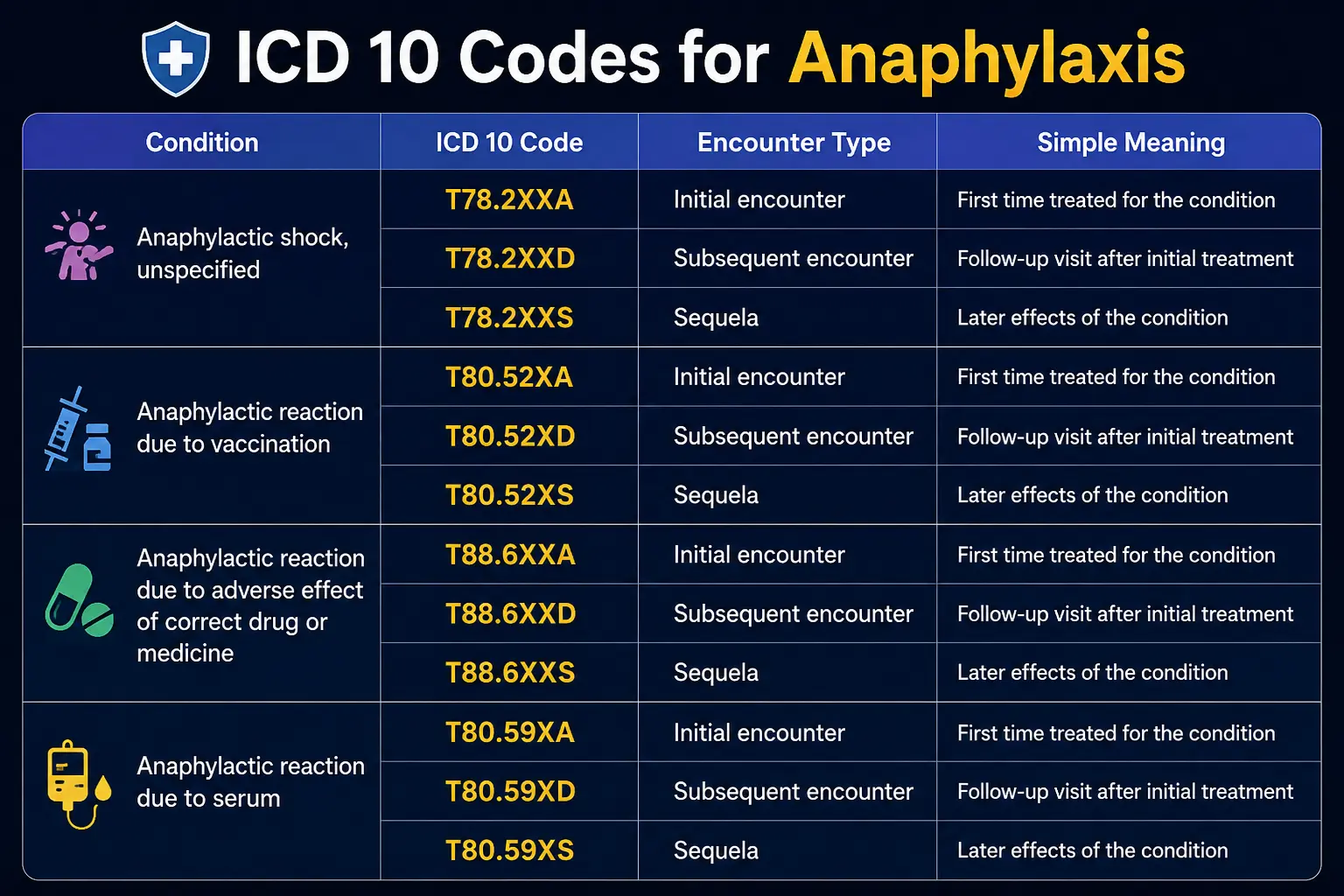
The general Anaphylaxis ICD 10 code for unspecified anaphylactic shock is T78.2XXA for an initial encounter. This code can apply when the provider documents anaphylaxis or anaphylactic shock but does not document a more exact cause.
Other anaphylaxis codes may apply when the cause is known. Food, serum, vaccine, blood products, drugs, or other triggers may lead to different codes. For example, T88.6XXA can apply to an anaphylactic reaction due to the adverse effect of a correct drug or medicine that was properly given.
When the record says anaphylaxis, coders should not use a general allergy code without checking for a better anaphylaxis code. Anaphylaxis carries higher risk and needs clear documentation.
ICD 10 Code for Angioedema
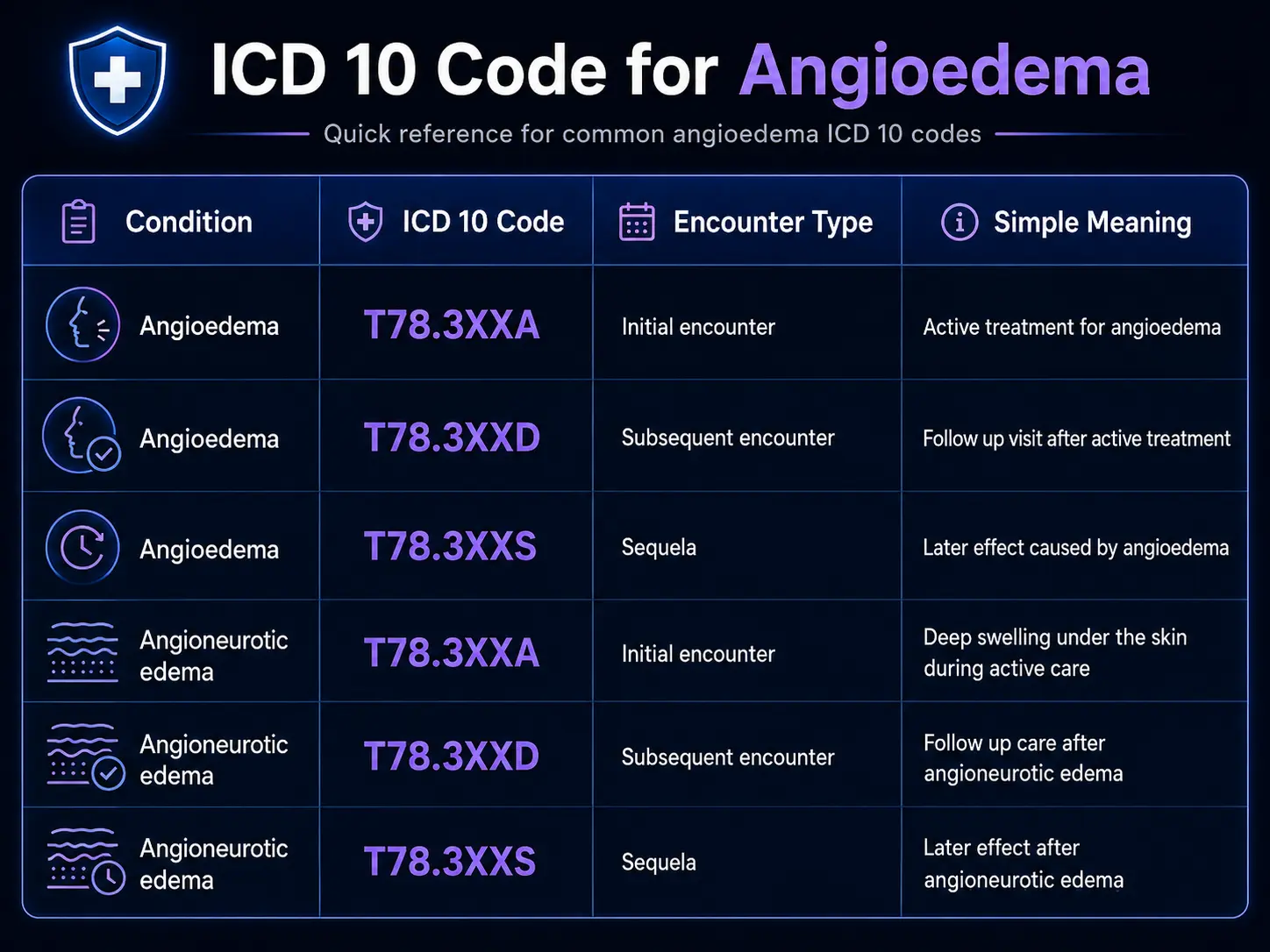
Angioedema means deeper swelling under the skin. It often affects the lips, face, eyelids, tongue, throat, hands, or feet. It may happen with hives, but it can also happen alone. It may be mild, but swelling in the tongue or throat can become serious.
The common code for angioedema is T78.3XXA for angioneurotic edema, initial encounter. This code can apply when the provider documents angioedema and the patient receives active treatment.
Coders should read the note closely. If the swelling is due to a drug, food, insect sting, or another known cause, more coding details may be needed. If the patient has throat swelling, breathing trouble, low blood pressure, or shock, the record may support anaphylaxis rather than simple angioedema.
Allergic reactions need the right ICD 10 code for clean claims and accurate medical records.
ICD 10 Codes for Food Allergy Reactions
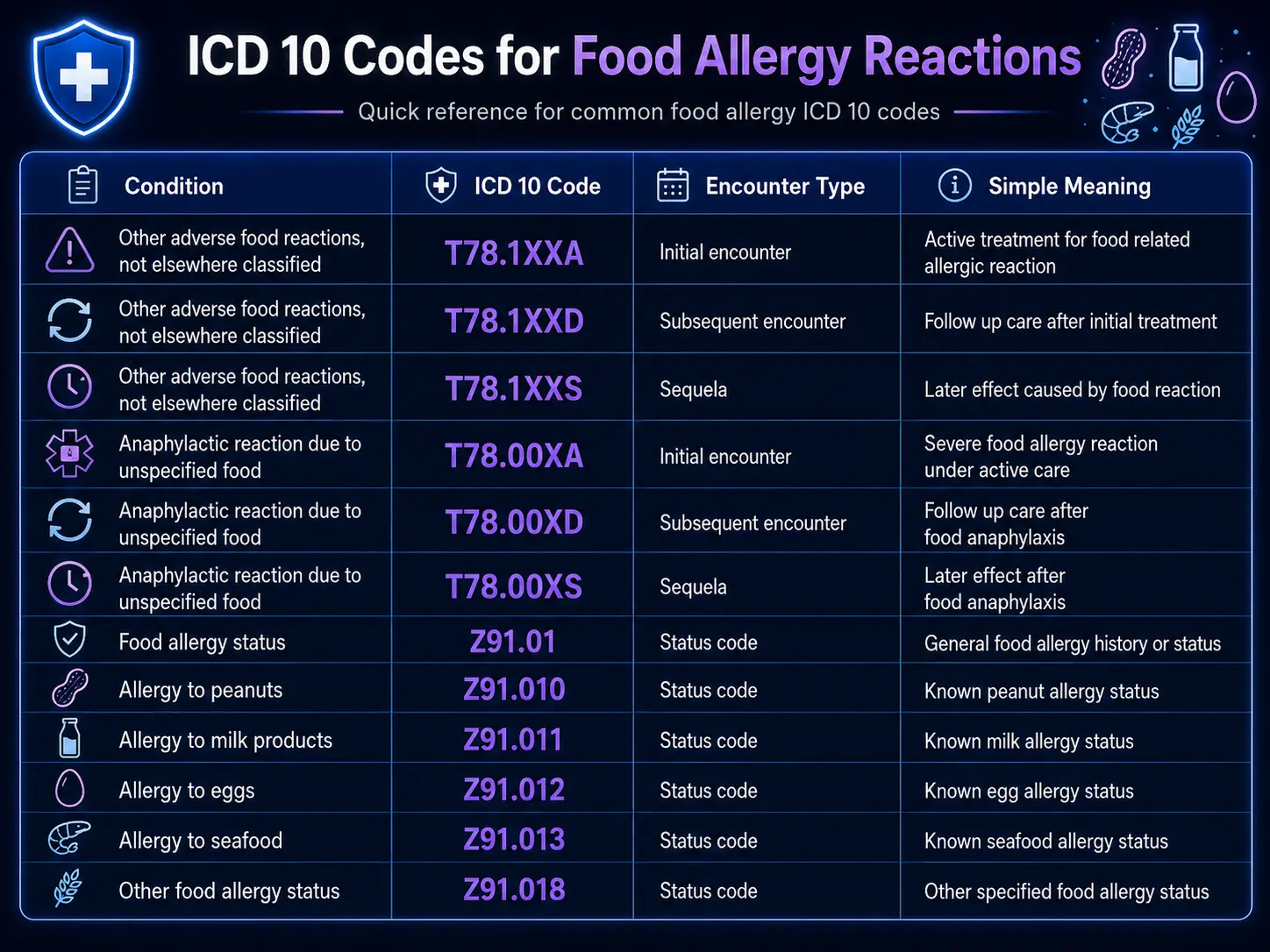
Food allergies can cause itching, hives, swelling, vomiting, stomach pain, wheezing, or anaphylaxis. Common triggers include peanuts, tree nuts, shellfish, fish, milk, eggs, soy, and wheat.
The Food allergy ICD 10 code depends on what the provider documents. If the patient has a current reaction due to food, codes from the T78 category may apply. If the patient only has a known history of food allergy, a Z91 code may apply.
For example, Z91.010 means allergy to peanuts. This code usually describes allergy status or history. It does not describe an active emergency reaction by itself. If a patient comes in with an active allergic reaction after eating peanuts, the coder should look for a current reaction code and may also report the allergy status code when the record supports it.
This is why the difference between an active reaction and allergy history matters. A patient can have a history of peanut allergy without having a current reaction. A patient can also have a current allergic reaction that needs treatment right now.
ICD 10 Codes for Drug Allergy Reactions
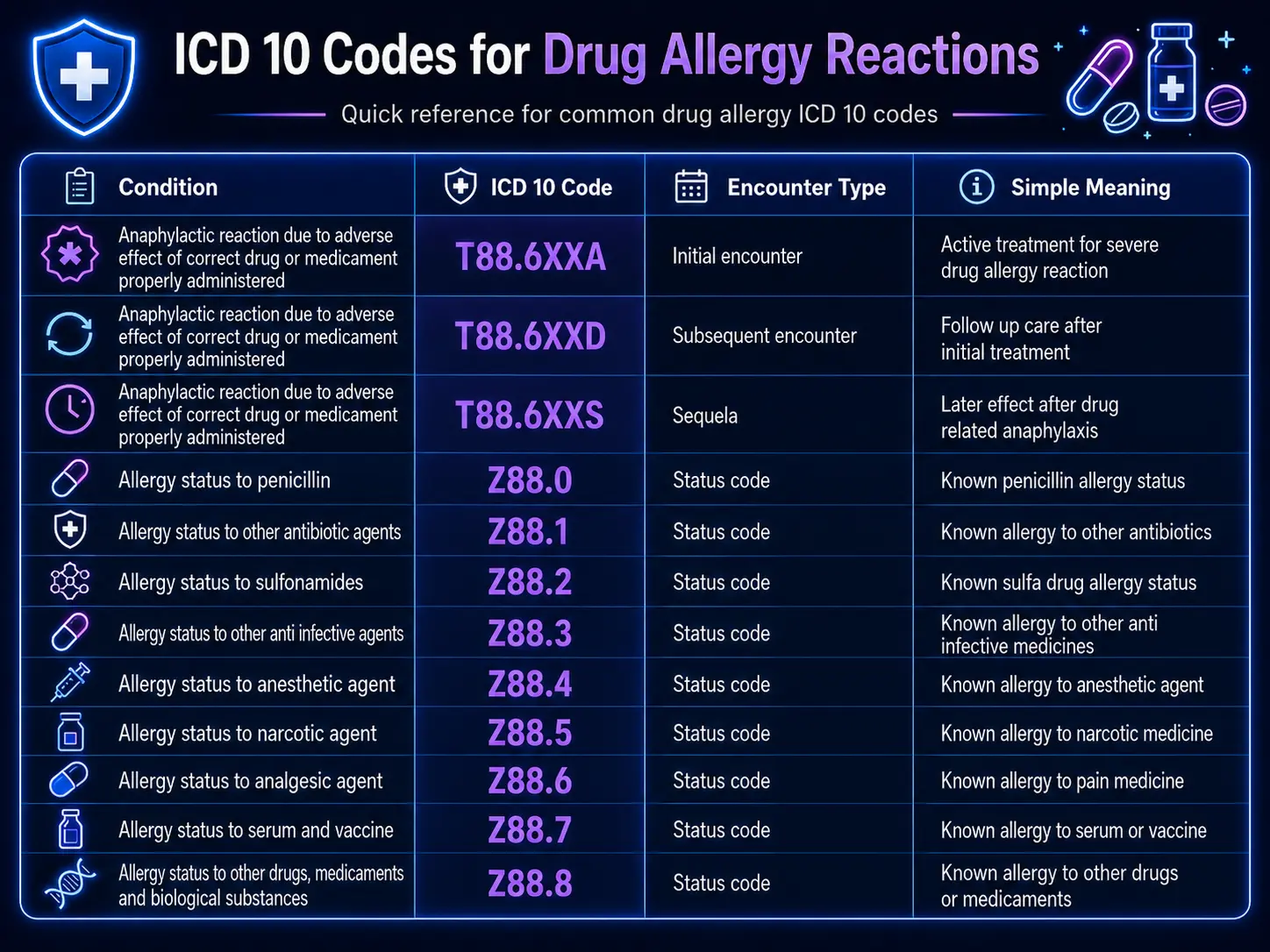
Drug reactions can happen after antibiotics, pain medicines, vaccines, anesthesia, contrast, or many other medicines. Symptoms may include rash, hives, itching, swelling, breathing problems, or anaphylaxis.
When a drug causes an allergic reaction, coders need to know whether the drug was taken correctly, whether the reaction was an adverse effect, and whether anaphylaxis occurred. T88.6XXA may apply when a patient has an anaphylactic reaction due to the adverse effect of a correct drug or medicine that was properly given.
For drug allergy history, Z88 codes often apply. For example, Z88.0 means allergy status to penicillin. Z88.1 means allergy status to other antibiotic agents. Z88.2 means allergy status to sulfonamides. Z88.4 means allergy status to anesthetic agent. These codes show that the patient has a known allergy history.
The provider note should name the drug when possible. Better documentation helps the coder choose a more accurate code.
ICD 10 Codes for Vaccine Allergy Reaction
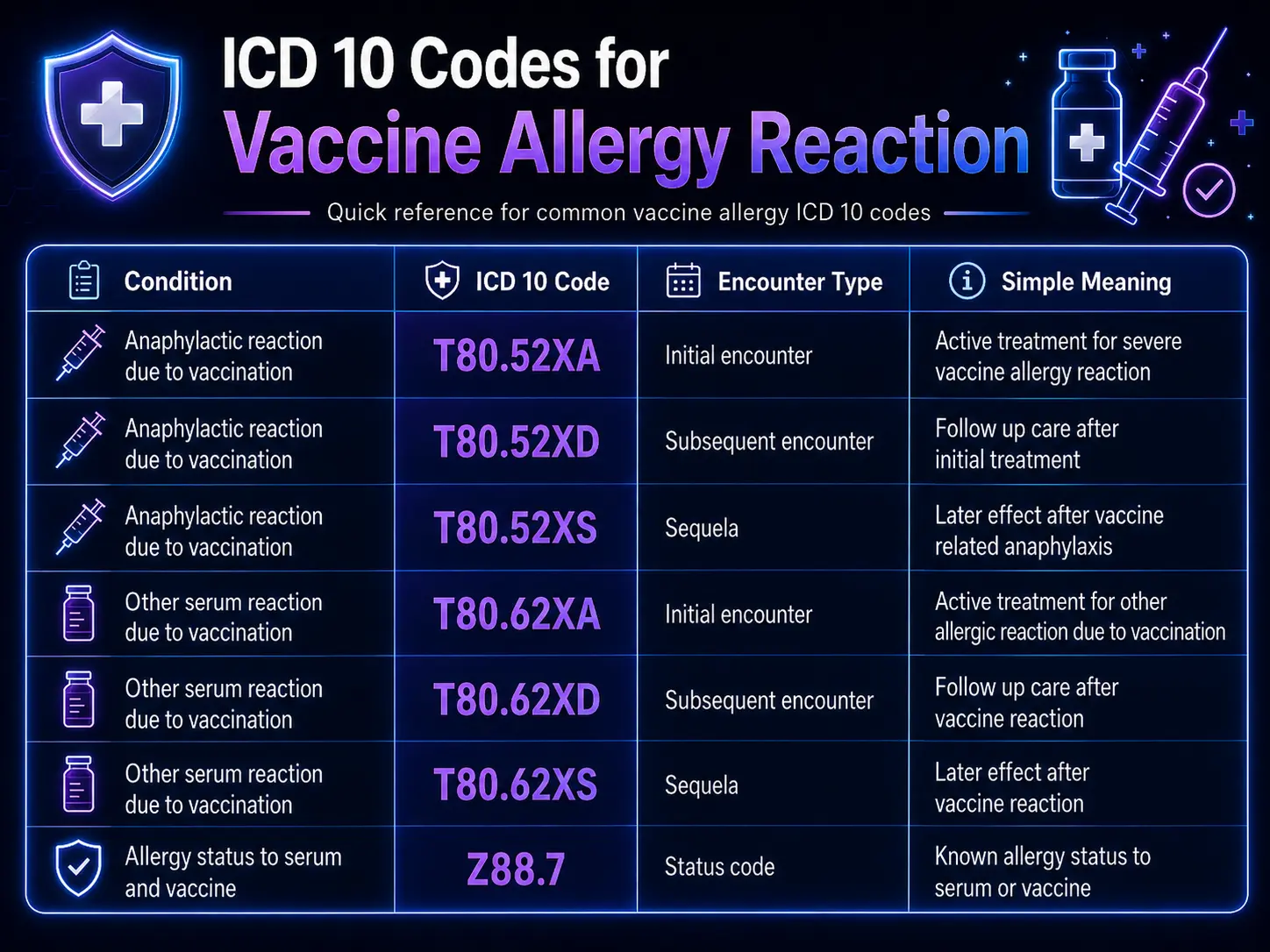
Some patients may have a reaction after a vaccine. The reaction may be mild, such as rash or itching, or severe, such as anaphylaxis. Vaccine reactions need careful documentation because the code depends on the type of reaction.
T80.52XA can apply to an anaphylactic reaction due to vaccination, initial encounter. T80.62XA can apply to other serum reaction due to vaccination, initial encounter.
The record should show whether the patient had anaphylaxis, another allergic reaction, or a local vaccine side effect. A sore arm or mild fever after a vaccine may not be coded the same way as an allergic reaction.
ICD 10 Codes for Allergy History
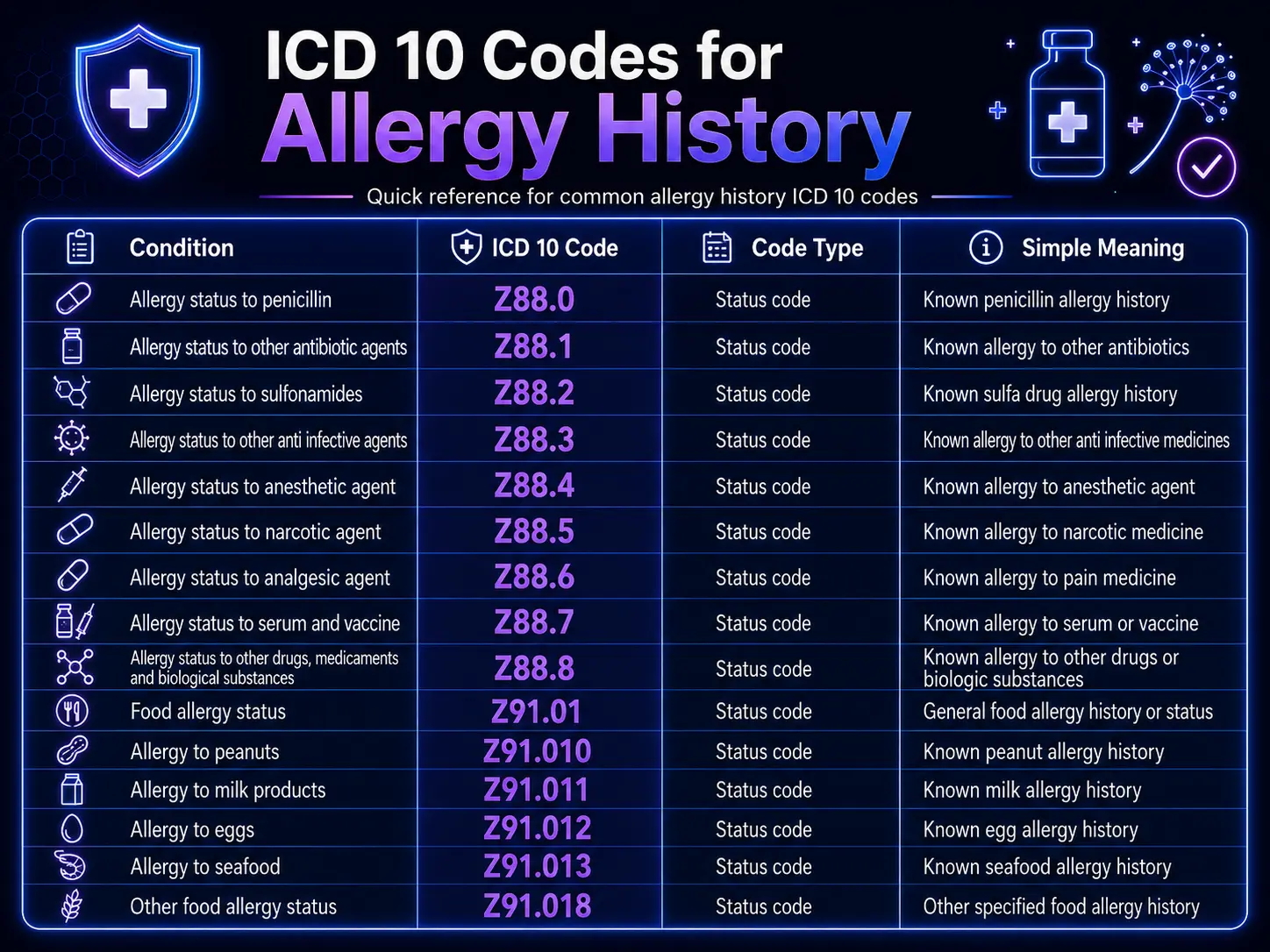
Allergy history codes help show known allergies in the patient record. These codes often start with Z88 or Z91. They do not always mean the patient has an active allergic reaction during the visit. They often show allergy status.
Common allergy history examples include Z88.0 for allergy status to penicillin, Z88.1 for allergy status to other antibiotic agents, Z88.2 for allergy status to sulfonamides, Z88.5 for allergy status to narcotic agent, Z88.6 for allergy status to analgesic agent, and Z91.010 for peanut allergy.
These codes can help protect the patient. When the medical record shows drug or food allergies clearly, providers can avoid giving the patient something that may cause harm.
Initial, Subsequent, and Sequela Codes
Many allergic reaction codes use the seventh character A, D, or S. This small letter changes the meaning of the code.
A means initial encounter. Use it when the patient receives active treatment. This can include an emergency room visit, urgent care visit, office treatment, or hospital care for the reaction.
D means subsequent encounter. Use it when the patient receives routine care after active treatment. A follow up visit to check recovery may use D when the situation fits.
S means sequela. Use it when the patient has a later effect from the allergic reaction. This is less common, but it can apply when the allergy event caused a lasting problem.
Coders should not choose A, D, or S based only on whether it is the first visit with that doctor. They should choose it based on the phase of care.
How to Choose the Right Allergic Reaction Code
To choose the right code, start with the provider documentation. Do not code only from the patient complaint if the provider gives a final diagnosis that says something different.
First, find out whether the patient has an active allergic reaction or only allergy history. Active treatment often needs a T code. Allergy status often needs a Z code.
Next, look for the cause. The cause may be food, medicine, vaccine, blood product, insect sting, latex, or unknown. If the cause is unknown, T78.40XA may fit for an unspecified allergy during active treatment.
Then check severity. If the provider documents anaphylaxis, use an anaphylaxis code when supported. If the provider documents angioedema, use an angioedema code when supported. If the note only says hives or rash, another skin code may fit better depending on the final diagnosis.
Finally, choose the correct encounter character. For active care, use A. For follow up, use D. For later effects, use S.
Documentation Tips for Providers
Clear documentation helps everyone. Providers should write the suspected trigger when they know it. They should state whether the reaction was mild, moderate, or severe. They should document symptoms such as hives, swelling, wheezing, vomiting, low blood pressure, or throat tightness. They should also state whether the patient had anaphylaxis.
The note should also show what treatment the patient received. Treatment may include antihistamines, steroids, epinephrine, oxygen, IV fluids, airway support, observation, or referral to an allergy specialist.
When a provider writes only allergic reaction, the coder may have to use an unspecified code. When the provider writes allergic reaction to amoxicillin with hives and lip swelling, the coder has much more detail.
Common Mistakes in Allergic Reaction Coding
One common mistake is using T78.40XA for every allergy case. This code works for an unspecified allergy during active care, but it does not fit all cases.
Another mistake is using an allergy history code when the patient has an active reaction. A history code tells the chart that the patient has a known allergy. It does not fully explain an active emergency visit.
A third mistake is missing anaphylaxis. If the provider documents anaphylaxis, shock, throat swelling, breathing trouble, or epinephrine use, coders should check whether an anaphylaxis code applies.
A fourth mistake is ignoring the seventh character. A, D, and S change the code meaning. Using the wrong one can create claim issues.
Simple Code Examples
A patient comes in with hives and itching after an unknown trigger. The provider treats the patient and documents allergic reaction, unknown cause. T78.40XA may apply.
A patient comes in with anaphylactic shock, but the trigger is not known. The provider treats the patient in the emergency room. T78.2XXA may apply.
A patient comes in with lip and face swelling. The provider documents angioedema and gives active treatment. T78.3XXA may apply.
A patient has a known penicillin allergy listed in the medical history, but the visit is for another reason. Z88.0 may apply when the allergy status matters to the encounter.
A patient has anaphylaxis after a correctly taken medicine. The provider documents an anaphylactic reaction due to adverse effect of the medicine. T88.6XXA may apply.
These examples show why the note matters. The same patient symptom can lead to different codes based on the final diagnosis and the cause.
Why Accurate Allergy Coding Matters
Accurate allergy coding supports better patient care. It tells future providers what happened and what the patient should avoid. It also helps emergency teams understand risk fast.
Accurate coding also supports billing. Insurance plans may ask whether the service was medically needed. A clear diagnosis code helps explain the need for treatment, testing, medicine, or follow up.
For clinics, clean coding can reduce denials. For patients, it can improve safety. For providers, it can create a stronger record.
Final Thoughts
ICD 10 codes for allergic reaction help turn allergy care into clear medical data. The most common unspecified code is T78.40XA for allergy, unspecified, initial encounter. But coders should not stop there when the record gives more detail.
Use anaphylaxis codes when the provider documents a severe allergic reaction. Use angioedema codes when the provider documents deeper swelling. Use food, drug, vaccine, and allergy status codes when the documentation supports them. Always check the cause, severity, active care status, and encounter type.
Good documentation leads to better coding. Better coding supports better care, cleaner claims, and safer records.
FAQs
What is the ICD 10 code for allergic reaction
The common ICD 10 code for allergic reaction is T78.40XA when the provider documents allergy, unspecified, and the patient receives active treatment. This code fits cases where the allergen or exact cause is not known.
What does T78.40XA mean
T78.40XA means allergy, unspecified, initial encounter. It usually applies when a patient receives active care for an allergic reaction, but the record does not name the exact trigger.
What is the ICD 10 code for anaphylaxis
The common code for unspecified anaphylactic shock is T78.2XXA for an initial encounter. If the cause is known, such as food, medicine, vaccine, or blood product, a more specific code may apply.
What is the ICD 10 code for angioedema
The common ICD 10 code for angioedema is T78.3XXA for angioneurotic edema, initial encounter. Use it when the provider documents angioedema and active treatment takes place.
Can I use T78.40XA for food allergy
You may use T78.40XA only when the reaction is unspecified and the record does not support a more specific code. If the provider documents a food allergy reaction or a known food allergy history, a more specific T78 or Z91 code may apply.
What is the difference between T78.40XA and Z88 codes
T78.40XA describes an active unspecified allergic reaction during active care. Z88 codes describe allergy status to drugs or similar substances. A Z88 code often shows allergy history, not the active reaction itself.
Should coders use unspecified allergy codes
Coders can use unspecified allergy codes when the provider note does not give enough detail for a more specific code. When the note names the trigger, reaction type, or severity, coders should check for a more specific code.
Is this coding guide medical advice
No. This guide gives general coding information for education. Providers and certified coders should follow the full medical record, payer rules, and current ICD 10 CM guidelines before choosing a final code.