
Getting paid on time is one of the biggest challenges in healthcare. Many providers deliver great care, but they still wait weeks or even months to receive payment. This delay increases accounts receivable days, also known as AR days. When AR days are high, cash flow slows down and financial pressure increases.
Today, artificial intelligence is changing this situation. AI reducing AR days in healthcare is helping providers speed up payments, reduce billing errors, and improve financial performance. Instead of depending on slow manual work, healthcare organizations now use smart systems that complete tasks faster and with better accuracy.
Table of Contents
ToggleWhat Are AR Days and Why They Matter
Accounts receivable days measure how long it takes for a provider to collect payment after services are delivered. When this number is high, it means payments are delayed and revenue is stuck in the system.
Healthcare providers aim to reduce accounts receivable days healthcare because faster payments lead to better cash flow and smoother operations. When payments arrive on time, organizations can invest in better services, staff, and technology. On the other hand, long delays create stress and increase the workload for billing teams.
The Common Causes of High AR Days
Many factors lead to high AR days in healthcare. Most of these issues come from manual processes and lack of accuracy. When billing teams enter data by hand, mistakes are more likely to happen. Missing patient details, incorrect codes, and incomplete claims all lead to delays.
These small errors can create large problems. A single rejected claim can take days or even weeks to fix. During this time, payment is delayed, and AR days continue to increase. This is why improving accuracy at the start of the process is so important.
How AI reducing AR days in healthcare
AI medical billing automation plays a key role in improving billing efficiency. It replaces repetitive manual tasks with intelligent systems that work quickly and accurately. Instead of checking every detail by hand, AI reviews data in seconds and ensures everything is correct before submission.
This automation reduces the chances of human error and speeds up the entire billing process. It also allows staff to focus on more important work instead of spending time on routine tasks. As a result, claims move faster through the system, and payments are received sooner.
Also read:
How AI Helps Reduce Claim Processing Time
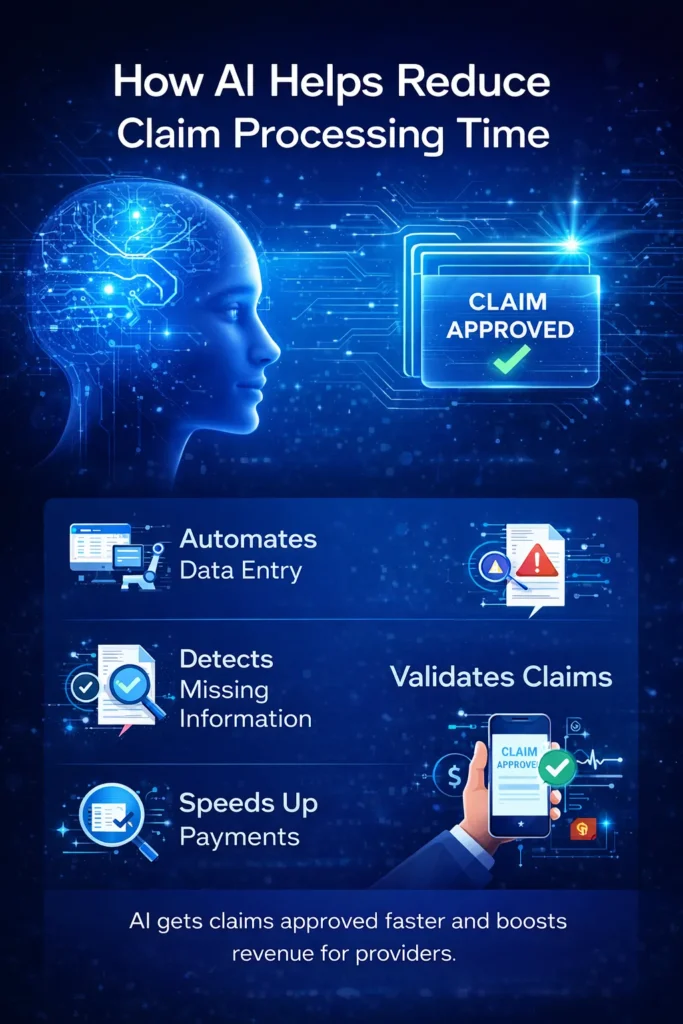
One of the biggest benefits of AI is its ability to reduce claim processing time. Traditional billing systems often involve multiple steps that take time to complete. Claims may wait for review, correction, or approval before moving forward.
AI removes these delays by processing claims in real time. It checks for missing information, verifies accuracy, and prepares claims for submission almost instantly. When claims are processed faster, they reach payers sooner, which leads to quicker approvals and faster payments.
Reducing Errors Before Submission
Errors are one of the main reasons for delayed payments in healthcare. Even a small mistake can cause a claim to be rejected or denied. Fixing these errors takes time and increases AR days.
AI helps prevent this problem by identifying errors before submission. It checks coding, patient data, and insurance details to ensure everything is correct. This results in cleaner claims that are more likely to be approved on the first attempt. When fewer errors occur, the billing process becomes smoother and more efficient.
Healthcare providers lose revenue every day due to claim denials and slow billing processes.
Improving Healthcare Revenue Cycle Management
Healthcare revenue cycle management includes every step from patient registration to final payment. When any part of this process slows down, it affects the entire system.
AI improves healthcare revenue cycle management by bringing accuracy and speed to each stage. It supports better data handling, faster claim submission, and improved tracking of payments. This creates a more connected and efficient workflow where delays are reduced and performance is improved.
Better Denial Management with AI
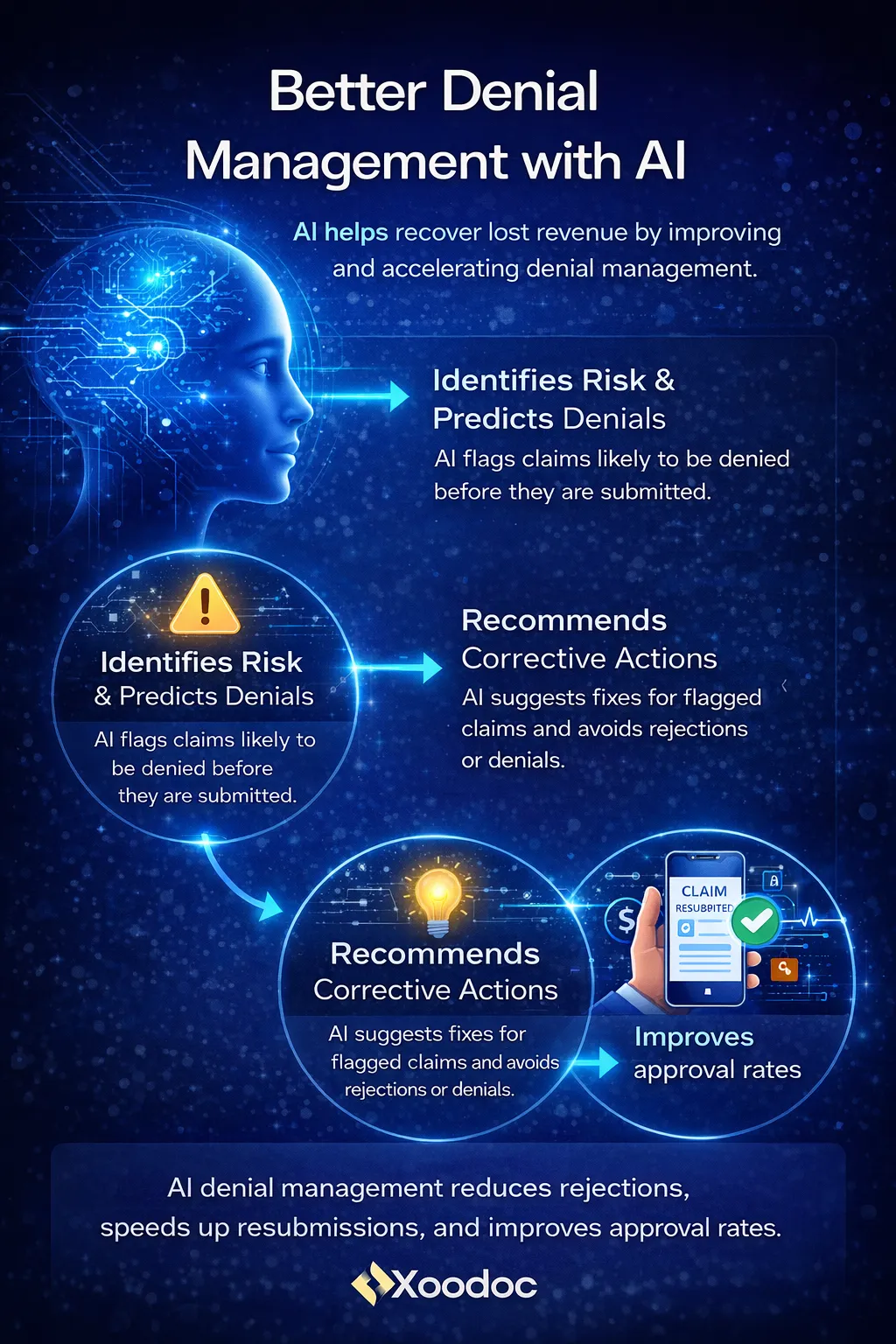
Denied claims are a major reason for high AR days. When a claim is denied, it must be reviewed, corrected, and submitted again. This process takes time and delays payment.
AI helps reduce denials by identifying potential issues before claims are submitted. It can predict which claims are at risk and suggest corrections early. For claims that are already denied, AI helps billing teams understand the reason quickly and take the right action. This speeds up resubmission and improves the chances of approval.
Real Time Visibility and Control
Another advantage of AI is real time visibility. Billing teams can track claims at every stage and see where delays may occur. This allows them to take action immediately instead of waiting for problems to grow.
With better visibility, providers gain more control over their billing process. They can monitor performance, identify patterns, and make smarter decisions. This level of insight helps reduce delays and improve overall efficiency.
According to CMS, efficient billing and faster claims processing are essential for improving healthcare cash flow.
How AI Supports Faster Payments
The main goal of reducing AR days is to get paid faster. AI supports this goal by improving every part of the billing process. When claims are accurate, processed quickly, and submitted on time, payments arrive sooner.
AI also improves follow up processes by tracking outstanding claims and ensuring that no payment is missed. This consistent approach helps providers maintain a steady cash flow and reduce financial stress.
The Future of AI in Medical Billing
AI will continue to grow and improve in the coming years. Future systems will become even more advanced and capable of handling complex tasks with ease. Healthcare providers will benefit from faster processes, better insights, and improved financial outcomes.
Organizations that adopt AI early will be better prepared for future challenges. They will have stronger systems, better performance, and a clear advantage in the industry.
Final Thoughts
AI reducing AR days in healthcare is helping providers solve one of the most common challenges in medical billing. By improving accuracy, speeding up processes, and reducing errors, AI makes it easier to get paid on time.
Lower AR days mean better cash flow, less stress for billing teams, and more opportunities for growth. As healthcare continues to evolve, AI will play an important role in shaping a faster and more efficient billing system.