
The healthcare claims process has a big impact on patients, providers, and payers. When claims move fast and clean, people get care without stress, providers get paid on time, and payers control costs. When claims slow down, everyone feels it. Long waits, denials, and repeat work waste money and energy. This is where AI is making a clear and measurable difference. In this post we look at how AI changes each step of the claims journey, what results you can expect, and how to get started in a safe and smart way.
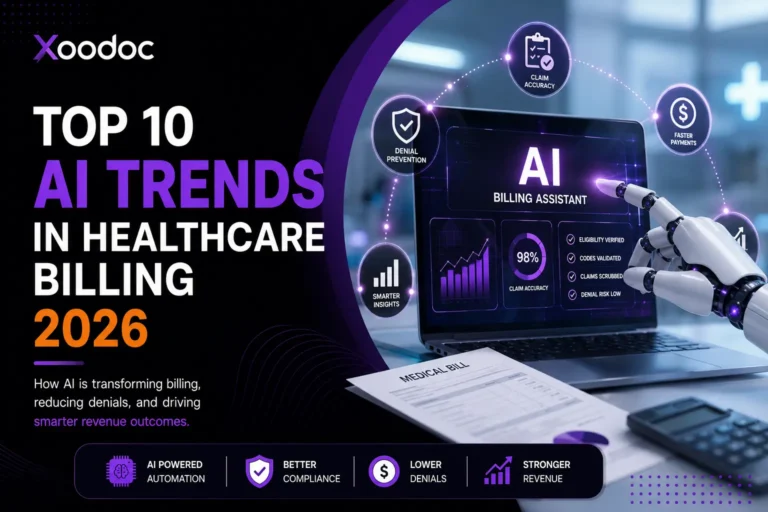
AI is reshaping the claims process by cutting out guesswork and repeat effort. It reads records, checks coverage, flags risk, and submits clean claims on the first try. Teams spend less time chasing errors and more time helping patients, while payers receive clear and complete proof up front.
Why Claims Are Hard Today?
A claim touches many systems and people. Data comes from electronic health records, clearinghouses, payer portals, and scanned documents. Codes must match notes. Coverage must match the plan. Rules change often. If any small item is off, the claim may bounce back or get denied. Teams then rework the claim, call the payer, add missing facts, and try again. This causes delays and higher costs. It also creates a poor experience for patients who just want to focus on healing.
What AI Brings To The Table
AI helps in three core ways. First, it understands and structures messy data. It can read notes, forms, and PDFs, then pull out the facts that matter. Second, it reasons over those facts. It can check coverage, apply payer rules, and spot missing items before submission. Third, it takes action. It can fill forms, draft appeals, and push clean claims to the right place. The result is fewer errors, faster decisions, and less manual work.
Intake That Starts Clean
Good claims start with good intake. AI can pull data from electronic records, scheduling tools, billing systems, and payer portals. It can match names, member IDs, codes, and dates even when formats differ. It catches conflicts early, such as a date that does not match a procedure note or a member number that is off by one digit. A clean intake saves time downstream and raises first pass acceptance.
Reasoning With Policy And Context
Coverage rules are complex. Plans vary by employer, state, and payer. AI can keep a living library of these rules and apply them to each case. It can ask simple but powerful questions. Is the provider in network. Is prior approval required. Does the diagnosis support the code. Are there notes that show medical need. If any item is weak, AI alerts the team and suggests what to add. This reduces denials that come from missing facts rather than true lack of coverage.
Risk Scoring And Next Best Action
Not every claim has the same level of risk. AI can score claims based on past patterns, payer behavior, and case details. A claim with a high score may need more proof before it goes out. A lower score claim can go straight through. AI can also suggest the next best step. For example, it may prompt a request for a key lab result that payers often ask for in similar cases. This guides teams to spend time where it matters most.
Taking Action At Speed
Once a claim is ready, AI can fill out forms, create accurate codes, and prepare the submission package. It can draft notes in clear language that payers understand. It can place tasks for humans when needed and push the claim to the right portal or interface. These actions are auditable. You can see what the system did, when it did it, and why.
End To End Tracking
After submission the work is not done. Claims need tracking. AI watches status updates, reads payer messages, and links payments to claims. If a claim stalls, AI sends a smart reminder. If a payment does not match the expected amount, it flags the gap. This cuts days in accounts receivable and reduces write offs.
Learning Over Time
The power of AI grows with feedback. Each claim teaches the system what works and what fails. When a payer starts to demand a new form of proof, the system adapts. When a provider group improves its documentation, the system notices and relaxes checks that are no longer needed. Over time the process becomes faster and more precise.
A Quick Look At An AI Driven Flow
Below is a simple interactive section that shows how an AI system can move a claim from intake to impact.
-
Ingest and normalize. Data is pulled from records, payer portals, and uploaded docs. Names, IDs, dates, and codes are cleaned and aligned so the claim starts right. 6.1 seconds
-
Verify and reason. Coverage is confirmed, plan rules are applied, and missing items are flagged early so avoidable denials do not happen. 11.4 seconds
-
Risk and plan. Each claim is scored for risk and likely friction points. The next best step is suggested so the team knows what to do first. 15.2 seconds
-
Take action. Forms are prepared, notes are drafted, codes and links are checked, and tasks are placed for any items that still need a human review. 18.6 seconds
-
Document. Clear audit ready summaries are generated with sources, so every decision is easy to see and explain. 22.0 seconds
-
Submit and track. The claim is sent to the right portal or API and statuses are watched with smart reminders. 24.8 seconds
-
Reconcile. Responses and payments are matched to claims. Any short pays or mismatches are flagged for quick follow up. 26.9 seconds
-
Learn and improve. Outcomes and feedback are captured to explain choices and make future runs faster and more accurate. Completed
The Bottom Line
AI is not a magic wand, but it is a real and proven way to make claims better. It reads and structures data, applies rules with care, and takes action with speed. It reduces avoidable denials and shortens the path to payment. It gives teams more time for the work that needs a human touch. For providers and payers who want to serve patients well and run a strong business, now is the time to bring AI into the claims process in a safe and measured way.