Table of Contents
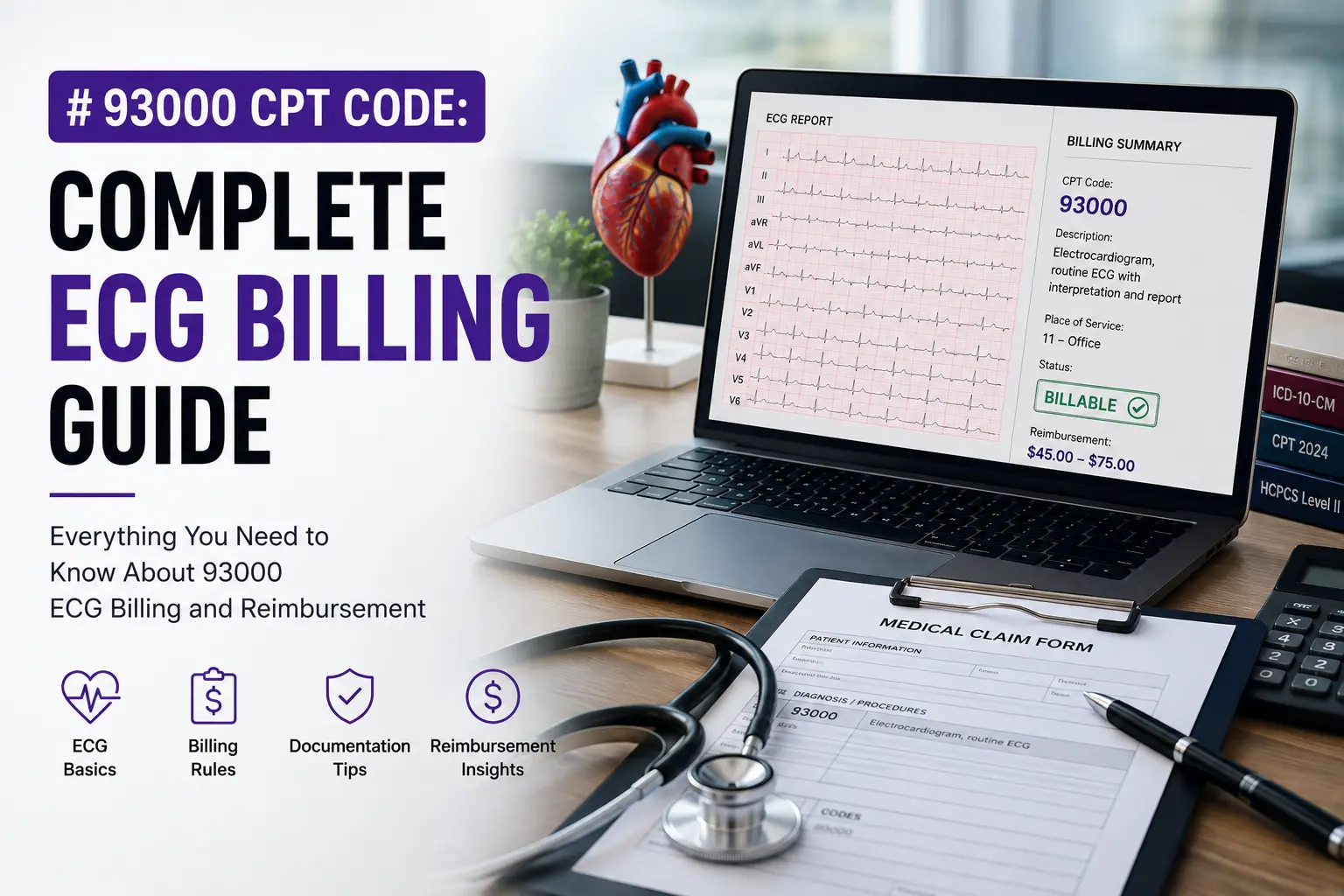
Toggle93000 CPT Code: Complete ECG Billing Guide
The 93000 CPT code is used for a complete routine electrocardiogram when the service includes at least 12 leads, the tracing, the medical interpretation, and a written report. It may look like a simple code, but correct billing depends on who performed each part of the service and where the test took place.
Healthcare practices should not choose this code only because an ECG machine created a tracing. The record must support the full service. If one party performs the tracing and another party reads the test, different codes may apply.
This guide explains the code in plain language. It covers the service parts, documentation, medical need, place of service, common denial causes, and claim review. It can help providers, coders, and billing teams understand what to check before they submit an ECG claim.
One ECG. Three billing paths. Choose the code that matches the work.
What Does the 93000 CPT Code Mean?
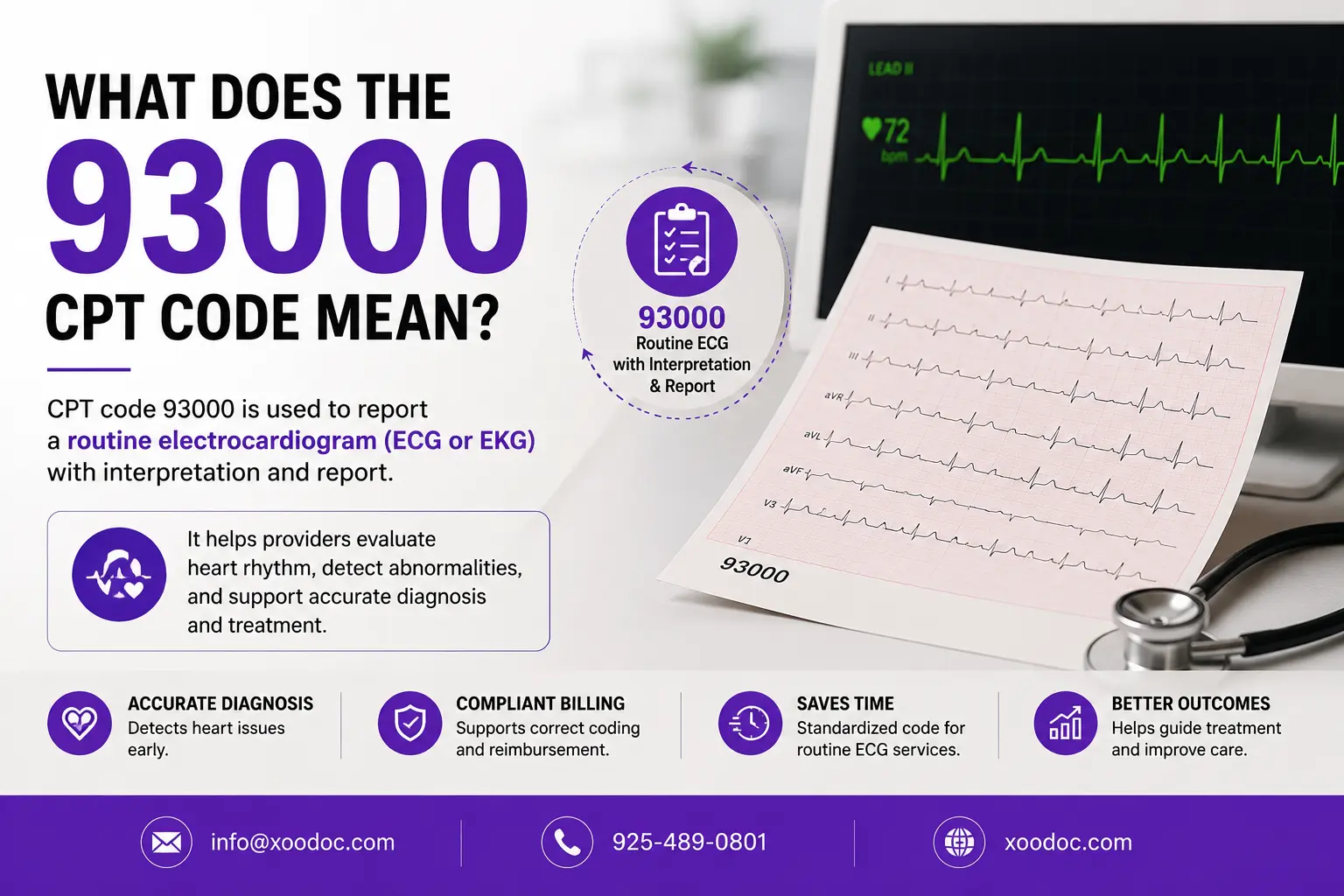
The 93000 CPT code describes a routine ECG with at least 12 leads, including the tracing, interpretation, and report. Many people call this a complete ECG or complete EKG. Both short names refer to the same type of heart test in everyday use.
An ECG records the electrical activity of the heart. A trained medical professional reviews the tracing and records findings in the patient chart. The code represents both the technical work needed to produce the tracing and the professional work needed to interpret it.
The CPT code 93000 description matters because every part must be present. If the claim includes only the tracing or only the reading and report, the complete code does not match the service.
What Is Included in a Complete ECG Service?
A complete ECG begins with the equipment, supplies, and staff work used to place the leads and create the tracing. This part is often called the technical part of the service. The tracing should be clear enough for a qualified professional to review.
The service also includes an interpretation. The professional studies the tracing, identifies the main findings, and connects them with the clinical reason for the test. A machine reading alone does not replace the professional interpretation required for the complete service.
The final part is a report in the medical record. The report should show that the professional completed and recorded the interpretation. A signature, date, and clear findings help connect the work with the claim.
When Can a Practice Report Code 93000?
A practice may report code 93000 when it provides the tracing and the interpretation with a report. The same physician or group does not always need to perform every physical step, but the billing party must meet payer rules for the full service.
The chart should show why the ECG was needed. It should also show that the test was completed and that a qualified professional reviewed the result. The billed code must match the work that the practice actually provided.
Practices should check payer policy before billing. Coverage can depend on the patient condition, the setting, the provider, and other services on the same date. A valid code does not promise payment by itself.
Understanding 93000, 93005, and 93010
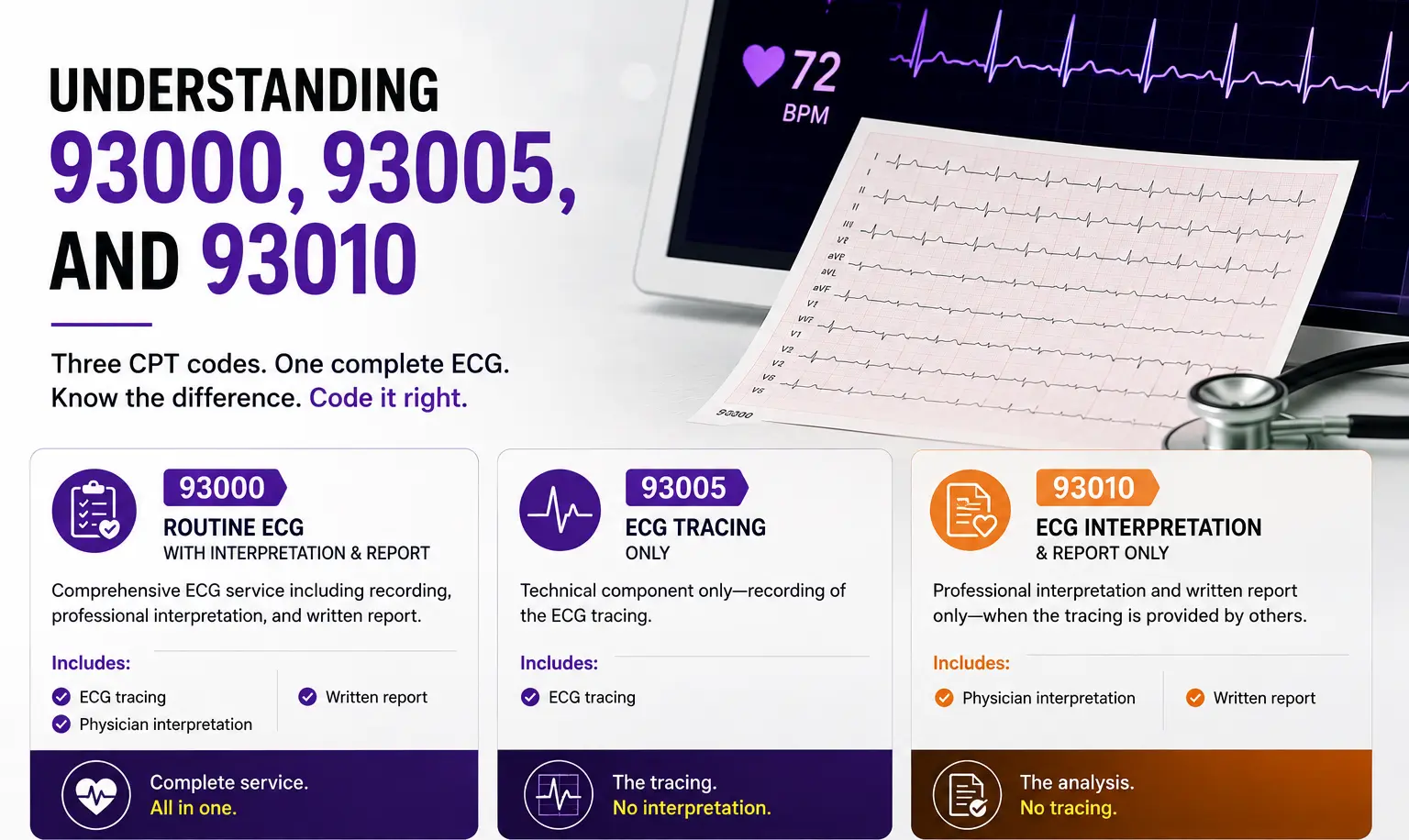
The code family separates a complete ECG into clear parts. Code 93000 covers the complete service. Code 93005 covers the tracing only, without the interpretation and report. Code 93010 covers the interpretation and report only.
The choice between 93000 vs 93005 depends on the work and billing rights. If a clinic owns the equipment and performs the tracing but an outside professional reads it, the clinic may need to report the tracing code instead of the complete code.
If a professional only reads a tracing produced by another organization and creates the report, the interpretation code may fit. Teams should never bill the complete code and a separate component code for the same service when that would report the same work twice.
Who Owns the Equipment and Who Reads the ECG?
Equipment ownership can help the billing team understand who provided the technical part. The team should confirm which organization supplied the machine, staff, room, and tracing work. Contracts can also affect who has the right to submit the claim.
The professional part belongs to the qualified person who interprets the ECG and creates the report. The record should identify that person. A computer generated statement without professional review does not show the full professional service.
When different groups provide the two parts, each group should report only its own work. Clear agreements and clear chart records reduce duplicate billing and make payer questions easier to answer.
Documentation Needed for Code 93000
Strong documentation begins with the order or clinical decision to perform the ECG. The note should explain the symptom, condition, medicine review, or other reason that led to the test. The reason should match the facts known during the visit.
The record should confirm that a routine ECG with at least 12 leads was completed. It should include the tracing or show where the tracing is stored. It should also contain a written interpretation with useful findings.
The report should identify the professional who performed the interpretation and the date of the work. Billing teams should confirm that the report is complete before they release the claim. Clear records support both coding and audit review.
Medical Need Must Support the ECG
Medical need connects the ECG to patient care. A payer may look for a symptom, known condition, medicine effect, treatment decision, or other reason that supports the test. The diagnosis on the claim should reflect the provider note.
Billing staff should not add a diagnosis only to gain coverage. The provider must document the patient condition and the reason for the service. If the note does not explain the need, the team should ask for clarification before claim submission.
ECG billing guidelines can vary by payer and plan. Practices should review the current policy that applies to the patient. A diagnosis accepted by one payer may receive different review from another payer.
Can 93000 Be Billed With an Office Visit?
A provider may perform an ECG during the same visit as an office evaluation. Both services may be reportable when the record supports separate work and each service meets the payer rules. The office note and ECG report should make the distinction clear.
The evaluation should go beyond the routine work linked to performing the ECG. The documentation should show the history, examination, medical decision, and reason for the test when those facts support both services.
A modifier may be needed on the office service in some situations, but staff should not add one as a routine habit. The claim should follow current coding edits and payer policy. Documentation must support any modifier used.
Common Reasons for a 93000 Claim Denial
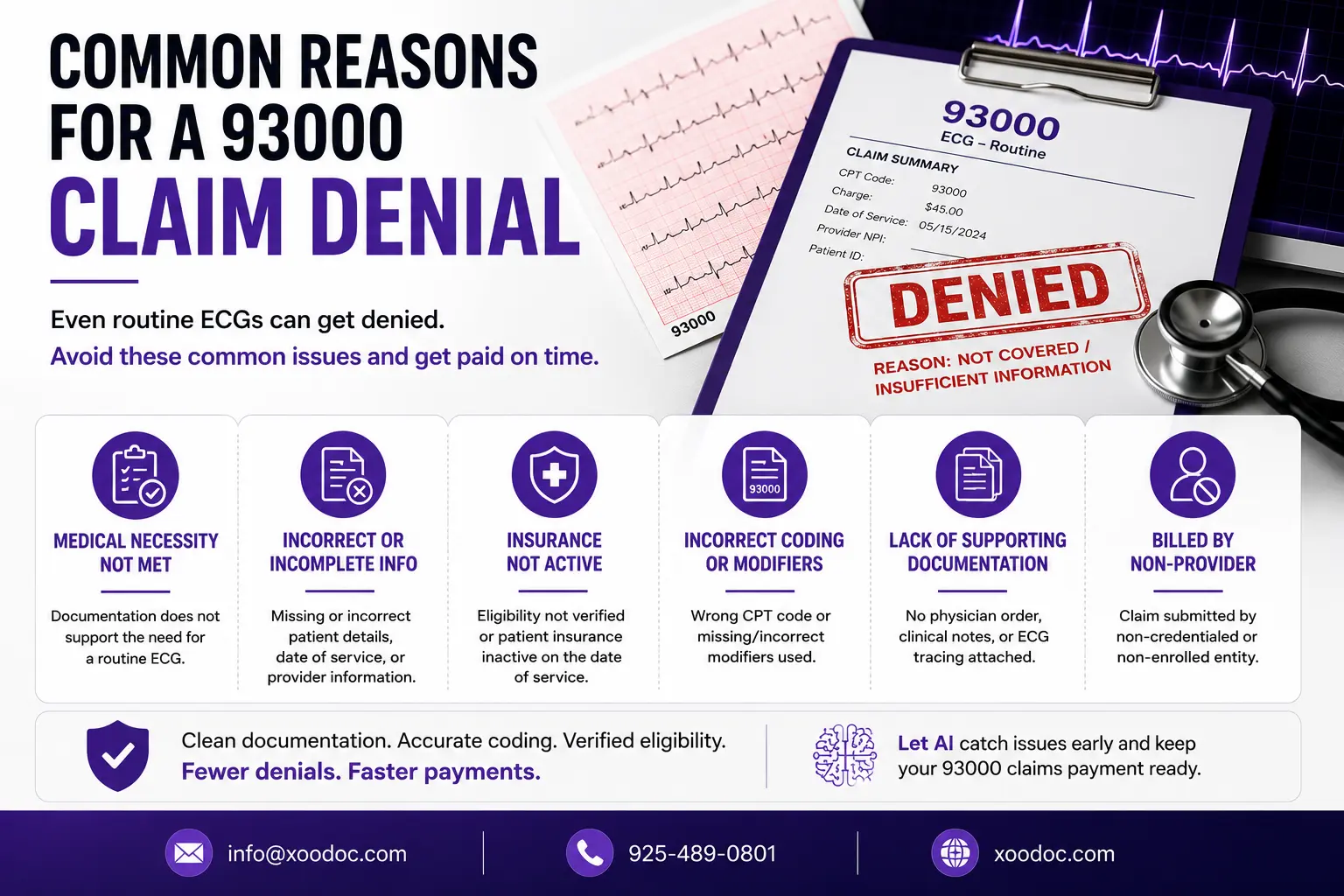
A common denial occurs when the practice bills the complete code but only performed the tracing. Another happens when the record lacks a written interpretation. A machine result without a clear professional report may not support the complete service.
Claims can also fail because the diagnosis does not support medical need, the place of service conflicts with the code, or another provider already billed a component. Duplicate services on the same date may receive close review.
Teams can prevent many of these issues before submission. They should compare the claim with the order, tracing, report, provider identity, place of service, and payer policy. A short review can save a much longer denial process.
Place of Service Can Change the Right Code
The place of service tells the payer where the patient received care. It can also show whether the billing practice likely provided the equipment and staff. A service performed in a private office may have a different billing path from a service performed in a hospital.
In a facility setting, the hospital may own the equipment and produce the tracing. A physician who only interprets the test should not report the full service as if the physician also provided the technical part.
Billing teams should compare the code with the location listed on the claim and in the chart. They should also check contracts and payer rules. This step can prevent payment errors and requests for repayment later.
How Payer Rules Affect ECG Billing
CPT rules explain the service, but each payer decides coverage and claim requirements. A payer may apply medical policy, code edits, frequency checks, provider rules, and documentation requests before it pays the claim.
Medicare guidance may not match every commercial plan. Medicaid rules can also vary by state. Staff should use the current source for the patient plan and avoid relying on an old payment result.
When a payer denies the claim, the team should read the exact reason before changing the code. A correction should match the work and record. The team should not switch codes only to force payment.
Coding Checks Before Claim Submission
Before submission, confirm that the patient and provider details match the chart. Check the date, place of service, diagnosis, and ordering information. Then verify that the code matches the service parts.
For code 93000, the record should show the tracing, professional interpretation, and report. If a part belongs to another group, use the proper component code when payer rules support it. Check for another ECG or related service on the same date.
Xoodoc clean claim automation can help teams find code, data, policy, and documentation gaps before transmission. Human review remains important when the facts are unclear.
How AI Can Support ECG Coding Accuracy

AI can read the chart and compare the documented work with the claim. It can flag a complete ECG code when the report is missing or when the place of service suggests that the practice did not provide the technical part.
It can also check code relationships, payer rules, and past denial patterns. These checks help coders focus on claims that need judgment instead of reviewing every normal claim in the same way.
Xoodoc AI Medical Coding suggests CPT, ICD, and HCPCS codes with source details and rule checks. The coding team can review each suggestion and approve the final result.
Related Xoodoc Resources for Cleaner Claims
Accurate ECG coding connects with the wider revenue cycle. Eligibility, coding, clean claims, denials, and payments all affect how quickly a practice receives the right amount.
Teams can learn more about connected claim work through Xoodoc healthcare revenue cycle automation. Practices with unpaid or underpaid claims can also review Xoodoc accounts receivable automation.
How Xoodoc Helps With Coding and Claims
Xoodoc brings clinical records, payer information, and claim data into one review flow. It can find missing support, check coding rules, prepare clean claims, track payer responses, and keep an audit record while the billing team stays in control.
A Simple Review Process for Billing Teams
Start by confirming what service the practice provided. Next, verify the order, tracing, interpretation, report, provider, and location. Then compare the claim with payer policy and any other service reported on the same date.
Why Accurate ECG Billing Supports the Revenue Cycle
Accurate ECG billing protects more than one claim. It helps the practice avoid repeated corrections, prevent duplicate component billing, and keep the patient balance accurate. It also gives leaders better information about denial causes.
When teams fix problems before submission, staff spend less time on payer calls and appeals. Faster, cleaner work supports steady cash flow and gives trained staff more time for complex accounts.
A connected system can carry lessons from one denial into the next claim review. That makes each result useful and supports ongoing improvement across the billing process.
The Key Point About the 93000 CPT Code
The main rule is simple. Report the 93000 CPT code only when the billing party provided the complete routine ECG service with at least 12 leads, including the tracing, interpretation, and report.
If the practice provided only one part, review 93005 for the tracing or 93010 for the interpretation and report. The chart, location, provider role, and payer rules should all support the final choice.
Careful review before submission can prevent avoidable denials. It also helps the claim tell the same clear story as the patient record.
Official Medicare ECG Billing Reference
For an official coverage source, review the CMS billing and coding article for electrocardiograms. Always confirm that the article and payer policy apply to the patient, location, and date of service.
Frequently Asked Questions
What is the 93000 CPT code used for?
It reports a complete routine ECG with at least 12 leads, including the tracing, professional interpretation, and written report.
What is the difference between 93000 and 93005?
Code 93000 covers the complete service. Code 93005 covers the tracing only without the interpretation and report.
What is the difference between 93000 and 93010?
Code 93000 covers the tracing and professional reading. Code 93010 covers only the interpretation and report.
Does 93000 require a written report?
Yes. The complete service includes a professional interpretation and report. A machine statement alone does not show the full professional work.
Can 93000 be billed with an office visit?
It may be possible when both services are separate, supported by the record, and allowed by the payer. A modifier may apply to the office service in some cases.
Can a hospital based physician bill 93000?
A physician who only interprets a hospital ECG generally reports the professional component rather than the complete service. The exact claim must follow payer rules and the work performed.